
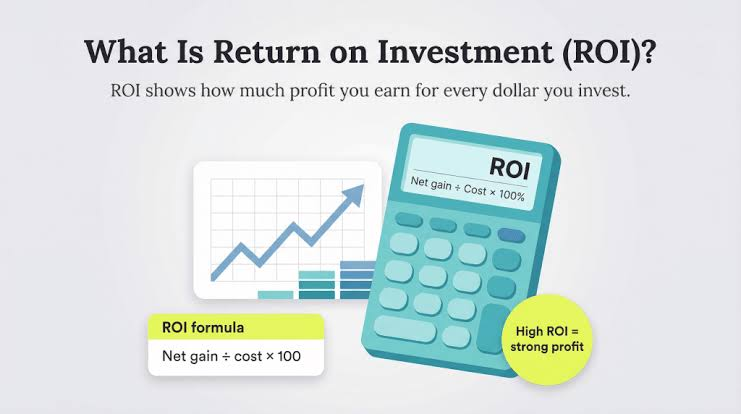
investment calculator
Have you ever wondered how your savings could turn into a fortune over time? Planning for the future can feel tricky when you do not know where to start. Fortunately, smart online tools make financial planning simple for everyone. An investment calculator helps you see how your money grows month after month. You do not need to be a math genius or a financial expert to understand your wealth potential. By entering a few basic numbers, you can instantly picture your financial future with absolute clarity.
Building wealth requires patience, consistency, and a clear plan for your hard-earned money. Many people struggle with saving because they cannot visualize the long-term results of their effort. Using an investment calculator gives you a clear roadmap to keep you motivated on your journey. Whether you save twenty dollars a week or hundreds of dollars a month, every bit counts toward your long-term success. Let us explore how you can use these simple digital tools to take full control of your money today.
What Is an Investment Calculator and How Does It Work
An investment calculator is a digital tool that estimates how much your money will grow over time. It uses simple mathematical formulas to project your future account balance based on your initial deposit, regular contributions, and expected rate of return. When you type in your details, the tool quickly calculates the compounded total for your chosen timeline. This allows you to test different financial scenarios in just a few seconds without doing complex math by hand.
Understanding the mechanics behind this tool helps you make far better financial choices for your family. The calculator factors in your starting balance, how often you add money, and your total investment timeline. It then applies an annual growth percentage to show you your estimated final total balance. Seeing these numbers clearly gives you the confidence to set realistic financial goals and stay focused on your long-term wealth strategy.
Why You Need an Investment Calculator for Smart Financial Planning
Setting financial goals without accurate numbers is like going on a long road trip without a map. An investment calculator gives you the exact figures you need to plan for retirement, a new home, or college funds. Instead of guessing how much money you might have in twenty years, you get a reliable estimate based on real math. This clear picture eliminates anxiety and helps you stay fully committed to your monthly savings habits.
Another major benefit of using this tool is that it saves you valuable time and prevents costly calculation mistakes. Manual math can lead to wrong estimates that throw off your whole long-term plan. With an investment calculator, you get instant results that you can count on for proper planning. It empowers you to adjust your savings habits today so that you can live comfortably tomorrow.
How Compound Interest Multiplies Your Money Over Time
Compound interest is the secret engine that drives long-term wealth accumulation for smart savers everywhere. It simply means earning interest on your original money plus the interest you have already earned in previous years. Over time, this snowball effect causes your balance to grow faster and faster. An investment calculator shows you this magic process in action by displaying your total earnings year by year.
To see compound growth clearly, imagine starting with one thousand dollars at a seven percent annual return rate. In your first year, you earn seventy dollars in interest, bringing your total to one thousand seventy dollars. In the second year, you earn interest on that new, higher total instead of just your starting amount. Over twenty or thirty years, this compound growth creates massive wealth without requiring extra effort from you.
Key Entires You Put Into an Investment Calculator
To get accurate results from an investment calculator, you must enter a few basic pieces of information. First, you input your starting balance, which is the amount of money you have available to invest today. Next, you add your regular contribution amount, specifying whether you save weekly, monthly, or yearly. These regular additions build up your balance and speed up your overall wealth growth over time.
Finally, you must enter your expected annual rate of return and your total time horizon in years. The return rate is the average percentage your investment grows each year based on historical market trends. The time horizon is simply how many years you plan to let your money compound uninterrupted. Inputting accurate numbers ensures your final wealth projection is as helpful and realistic as possible.
How to Estimate Your Expected Rate of Return Correctly
Choosing the right interest rate to enter into your investment calculator is essential for getting helpful estimates. Different types of assets offer varying levels of return and financial risk over time. Savings accounts offer low returns with high safety, while stock market index funds historically yield higher average returns over long periods. Looking at historical performance helps you select a reasonable interest rate for your calculations.
It is always wise to use conservative figures when projecting your future wealth growth. If historical stock market returns average around eight percent annually, you might calculate using six or seven percent to stay safe. This cautious approach prevents you from overestimating your future wealth and falling short of your goals. Being conservative with your estimates ensures you remain pleasantly surprised by your actual long-term results.
The Impact of Starting Your Investment Journey Early
Time is the single most powerful factor when it comes to growing your money through compounding. The earlier you begin saving, the less money you actually need to contribute out of your own pocket. An investment calculator clearly demonstrates how starting ten years earlier can double or triple your final balance. Even small monthly amounts grow into impressive sums when given decades to compound continuously.
Consider two friends who both want to save for their future retirement. The first friend starts saving one hundred dollars a month at age twenty-five, while the second starts at age thirty-five. By age sixty-five, the early saver will have significantly more wealth despite contributing only a little more cash. Using an investment calculator reveals this time advantage clearly, proving that the best time to start is always today.
Comparing Savings Accounts vs Market Investments
Where you decide to place your money plays a huge role in your ultimate financial success over time. Traditional bank savings accounts offer great safety, but their low interest rates rarely keep up with rising costs of living. Stock market index funds and mutual funds carry more short-term ups and downs, but they offer much higher long-term growth potential. An investment calculator lets you compare these two choices side by side instantly.
When you run the numbers through the calculator, the difference in final outcomes becomes shockingly clear. A safe bank account might grow your money slightly, but an index fund can compound it significantly over twenty years. Seeing these realistic projections helps you strike the right balance between safety and growth. You can choose the best home for your money based on your personal comfort with risk.
Complete Growth Comparison Table
| Timeline | Monthly Addition | Low Growth Rate 3 Percent | Medium Growth Rate 6 Percent | High Growth Rate 9 Percent |
| Starting Amount 1000 | 100 per month | 5 Years Total 7,532 | 5 Years Total 8,162 | 5 Years Total 8,858 |
| Starting Amount 1000 | 100 per month | 10 Years Total 15,123 | 10 Years Total 17,808 | 10 Years Total 21,071 |
| Starting Amount 1000 | 100 per month | 20 Years Total 33,403 | 20 Years Total 45,713 | 20 Years Total 63,982 |
| Starting Amount 1000 | 100 per month | 30 Years Total 58,111 | 30 Years Total 95,888 | 30 Years Total 163,048 |
Real Life Example How Sarah Reached Her Financial Goal
Let us look at a real-life scenario to see how an investment calculator changes financial planning. Meet Sarah, a thirty-year-old graphic designer who wanted to accumulate one hundred thousand dollars by age fifty. She had five thousand dollars in savings and could comfortably set aside two hundred dollars every single month. However, she was unsure if her plan was realistic or if she needed to save more.
Sarah plugged her figures into an investment calculator using a conservative seven percent average annual return. The tool showed her that her money would grow to over one hundred and nine thousand dollars in twenty years. Seeing this clear target gave her immense confidence and encouraged her to set up automated monthly deposits right away. Today, Sarah stays on track without worrying because she mapped out her journey in advance.
Common Mistakes to Avoid When Using an Investment Calculator
While digital tools are extremely helpful, making simple mistakes can lead to flawed expectations about your money. One common error is forgetting to account for inflation, which reduces your purchasing power over time. Another mistake is assuming that market returns will be smooth and consistent every single year without any drops. Real market growth fluctuates up and down, so your projections represent average estimates rather than guaranteed promises.
Additionally, many people forget to include investment fees and taxes in their overall calculations. High management fees can eat away a sizable portion of your compound interest over several decades. To get the most accurate results from an investment calculator, always factor in estimated fees and taxes. Staying mindful of these hidden costs keeps your financial plan strong and realistic for the future.
How to Adjust Your Plan When Your Goals Change
Life is unpredictable, and your financial strategy will naturally need to change as your income and priorities shift. You might receive a pay raise at work, pay off a major debt, or welcome a new child into your family. Whenever a significant life event occurs, you should revisit your investment calculator to update your financial projections. Adjusting your numbers ensures that your savings plan matches your current reality.
If you find that you are falling short of your long-term wealth targets, do not panic. You can use the calculator to see how small changes alter your final result dramatically. Increasing your monthly deposit by just twenty-five dollars or extending your timeline by two years can close the gap. Testing these quick adjustments gives you total control over your financial destiny at every stage of life.
Frequently Asked Questions
Is an investment calculator completely accurate
An investment calculator provides highly accurate mathematical estimates based on the specific numbers you enter. However, it cannot predict future stock market swings, unexpected economic changes, or sudden shifts in inflation rates. Treat your calculated results as a useful planning roadmap rather than an exact guarantee of future balances.
What is a good return rate to use in calculations
For a conservative, long-term stock market portfolio, an average return rate between six and eight percent is standard. This range aligns with long-term historical market averages after adjusting slightly for unexpected downtime. If you choose low-risk savings products, use a lower return rate between two and four percent instead.
Does an investment calculator account for annual taxes
Most basic online calculators do not automatically deduct taxes or brokerage fees from your final projected results. Taxes depend entirely on your personal income bracket, location, and the specific account types you choose to use. To stay accurate, you can subtract one or two percent from your estimated growth rate to account for taxes.
How often should I check my investment projections
Checking your long-term calculations once or twice a year is plenty for most individual savers. Reviewing your strategy annually allows you to adjust for income changes, new savings goals, or personal milestones. Avoid checking daily market swings, as short-term changes do not alter your long-term compound growth potential.
Can I use this tool for short term financial goals
Yes, you can use the tool for short-term goals like saving for a wedding, car, or vacation over two to five years. However, compound interest works best over longer timelines like ten, twenty, or thirty years. For short-term plans, focus more on your regular monthly savings amount rather than long-term interest gains.
Why does compound interest matter so much for wealth
Compound growth allows your money to earn additional returns on top of its previous earnings year after year. This creates a powerful wealth building effect where your total balance grows exponentially faster over time. It rewards patient savers by generating substantial income without requiring you to do extra physical labor.
Conclusion
Taking charge of your financial future is one of the smartest decisions you can ever make for yourself and your family. An investment calculator breaks down complex financial formulas into simple steps that anyone can easily understand. By showing you the incredible power of compound interest, this tool helps you turn small monthly savings into real wealth. You do not need a lot of money to start building a secure tomorrow today.
Now that you understand how simple it is to map out your money growth, take action right away. Gather your current numbers, try out different savings scenarios, and create a solid plan that fits your life. Automate your monthly contributions and let time do the heavy lifting for your portfolio. Start using an investment calculator today to turn your financial dreams into a clear, achievable reality.
About the Author
